









DATE
2.1.2024
AUTHORS

Kevin Möller
TOPICS
Governance & regulation
SHARE


 Climate managementUnternehmens-KlimabilanzProduktklimabilanzÖkobilanzierungClimate target settingTransition Plan (CTP)Bewerten von Klimarisiken
 ReportingReporting in accordance with CSRDWesentlichkeitsanalyse DWAVoluntary StandardEUDR-BeratungSECR-ReportingCBAM-Beratung
 StrategySustainability strategyManagement-SystemBiodiversity strategyClimate strategyClimate Transition PlanInterim-Team

Blog


DATE
2.1.2024
AUTHORS
Kevin Möller
TOPICS
Governance & regulation
SHARE
SECR stands for Streamlined Energy and Carbon Reporting and is the legally required framework for disclosing energy consumption and greenhouse gas emissions in the United Kingdom. Since April 2019, certain companies have been required to publish SECR-compliant disclosures in their management report or in a separate energy and CO2 report.
The goal is to promote transparency in addressing energy and climate issues, improve energy efficiency, and enable ESG comparisons at the national level. SECR thus expands on previous reporting requirements and complements other UK regulations such as ESOS and the TCFD requirements.
The SECR requirement applies to all publicly traded companies headquartered in the United Kingdom, as well as large private companies and large LLPs (Limited Liability Partnerships). A company is considered “large” if it meets at least two of the following criteria:
Excluded are companies with an annual energy consumption of less than 40 megawatt-hours, public bodies, and organizations without a physical presence in the United Kingdom.
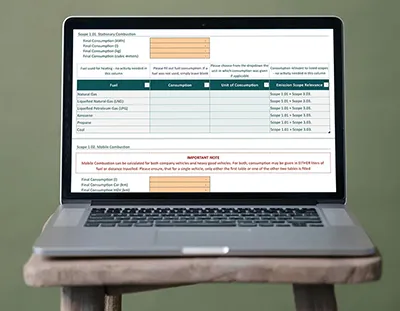
The scope of SECR reporting varies depending on the type of company, but follows a standardized core framework. Among other things, companies must disclose the following information:
Listed companies must also disclose global Scope 1 and Scope 2 emissions, specific greenhouse gases, and the proportion of UK-related emissions.
SECR allows for the omission of certain information if its disclosure would be unreasonable for the company. Two scenarios are considered permissible in this regard:
In both cases, a clear justification is required, along with the expectation that companies will work toward having a complete set of data in the medium term.
This is implemented in practice through the Directors’ Report or a separate energy and CO2 report. Both documents form part of the annual financial statements and are filed with Companies House. There is a separate reporting template for LLPs. For corporate groups, the following applies: If a subsidiary is already fully included in the parent company’s report, it may in many cases be exempt from a separate reporting requirement. However, it is the company’s responsibility to document this clearly and provide evidence if necessary.
To efficiently meet SECR requirements and ensure the quality of disclosures, we recommend the following approach:
Companies that view their SECR reporting not merely as a regulatory obligation but as a strategic management tool have a clear advantage—especially when engaging with investors and business partners.
SECR is not merely a reporting requirement, but an effective tool for improving efficiency and ensuring credible ESG communication. Organizations that understand the requirements, establish the necessary structures early on, and have access to reliable data not only improve their own carbon footprint but also strengthen the trust of investors, customers, and partners.
Do you need assistance with carbon footprint calculations and SECR-compliant reporting? Five Glaciers Consulting supports companies with practical advice, sound methodology, and climate-related industry expertise.
Governance & regulation
Climate management
Strategy


Governance & regulation


Contact us for all concerns and questions relating to sustainability. We are happy to make time for a personal meeting or a digital coffee.
Headquarters in Hamburg
Tel.: +49 174 1305766
Email: info@fiveglaciers.com
Branch Office in Kiel
Tel.: +49 (0) 174 1305766
Direct appointment booking


