








{ "@context": "www.schema.org", "@type": "Article", "headline": "FLAG-Emissionen: Warum Unternehmen Landnutzung in ihrer Klimastrategie berücksichtigen müssen", "image": "https://cdn.prod.website-files.com/6409d0fe12f66a38fe3457ae/6875234262a7581eaf807144_pexels-quang-nguyen-vinh-222549-2132250%20Kopie.webp", "author": { "@type": "Person", "name": "Dr. Florian Niedermeier" }, "publisher": { "@type": "Organization", "name": "Five Glaciers Consulting GmbH", "logo": { "@type": "ImageObject", "url": "https:\/\/assets-global.website-files.com\/6409d0fd12f66a028e345794\/645fb74202edee1b70a98084_Vector%20(76).svg" } }}

Blog

Land-Use Emissions: Why Companies Must Factor Land Use into Their Climate Strategies

Orange downward arrow to the content

DATE

14.7.2025

AUTHORS

TOPICS

Experiences & comments

Governance & regulation

SHARE

The Role of Land Use in Carbon Accounting (CCF)

Reducing greenhouse gas emissions is no longer limited to direct emissions from the combustion of fossil fuels. Companies with land-based value chains face an additional challenge: so-called FLAG emissions. The forestry, land use, and agriculture sector (FLAG for short) is responsible for about a quarter of global greenhouse gas emissions. In addition to direct emissions from fertilizer use, livestock farming, or deforestation, indirect emissions also arise from changes in land use. So any company that wants to embark on a path toward climate neutrality or net-zero—for example, through the Science Based Targets Initiative (SBTi)—must also take these emissions into account.

FLAG accounting is particularly crucial for companies in the food, consumer goods, and agricultural sectors. However, these requirements are also rapidly gaining importance for other industries where land use impacts the supply chain (such as textiles, retail, or raw material extraction).

What are FLAG emissions?

FLAG emissions include emissions from the following sectors:

  • Land-use changes (e.g., deforestation, restoration, reforestation)
  • Agricultural processes (e.g., fertilizer application, livestock farming)
  • Changes in soil carbon (e.g., due to tillage, erosion, or restoration measures)

These emissions occur either directly (Scope 1) or along the value chain (primarily Scope 3.1 and 3.3). What makes them unique is that different methods and target pathways apply here than for energy-related emissions. Unlike traditional Scope 1, Scope 2, and Scope 3 emissions, FLAG emissions are often more difficult to measure and influence. At the same time, their share—especially in certain industries—is significant.
‍

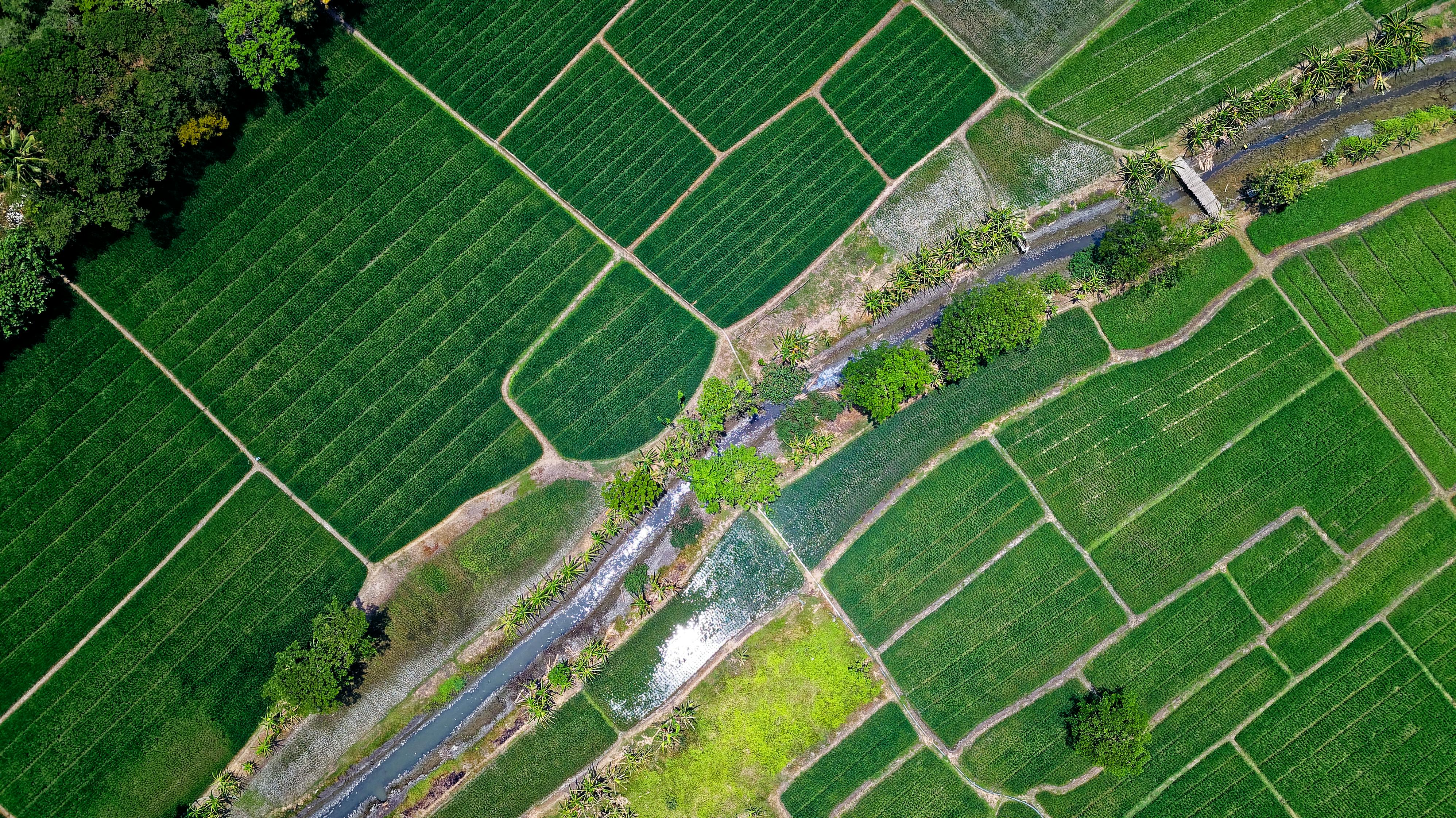
Aerial view of fields showing changes in agricultural land use
Source: Tom Fisk (Pexels)

Distinction: FLAG vs. LULUCF—and how they are related

The term LULUCF stands for "Land Use, Land Use Change, and Forestry" and is closely linked to the FLAG concept. While FLAG focuses specifically on emissions, LULUCF is a broader reporting framework, particularly in national greenhouse gas inventories prepared in accordance with IPCC guidelines. Companies dealing with FLAG typically must also quantify their LULUCF-related emissions and sinks, e.g., when recording carbon sequestration through afforestation or emissions released through deforestation. In summary, the following key differences exist:

Term Meaning Relevance in Reporting
LULUCF Land Use, Land Use Change, and Forestry – Sector in the National Inventory Focus on net changes in land use
FLAG Forest, Land, and Agriculture – Company-Specific Financial Statements Includes all direct and indirect emissions

Important: While LULUCF is typically viewed from a political and regulatory perspective (e.g., UNFCCC, IPCC), FLAG is an accounting framework at the organizational level—with specific targets and methods.

The GHG Protocol Standard for FLAG

In October 2022, the Greenhouse Gas Protocol published the "Land Sector and Removals Guidance" standard—a supplementary module for organizations that work with land-use or removals data. The key principles:

  • Separate accounting: FLAG emissions are recorded separately from energy-related emissions.
  • Tracking carbon flows: Net removals resulting from afforestation or humus formation must also be accounted for.
  • Comprehensiveness in Scope 3: Land use by suppliers is also taken into account—for example, in the production of palm oil, cocoa, or beef.

In addition, the GHG Protocol recommends consistent tracking over several years to provide a solid foundation for rebaselining and target setting.

Which companies are affected?

According to the GHG Protocol guidelines, companies are affected if:

  • they use agricultural products or wood,
  • key Scope 3 categories such as 3.1 (purchased goods) or 3.11 (sold products) are associated with FLAG emissions,
  • they operate their own agricultural production sites,
  • their raw materials come from regions at risk of deforestation.

SBTi FLAG: Additional Requirements for Targets of Agricultural and Forestry Companies

Starting in 2023, companies that pursue science-based climate targets and operate in FLAG-relevant sectors must submit an additional FLAG target. The key requirements are:

  • Separate objective for FLAG (in addition to the energy-related objective)
  • Coverage of all FLAG-relevant emissions in Scopes 1–3
  • No use of offsets to achieve targets (only removals after deducting emissions are permitted)
  • No "double counting" of CO₂ sinks (e.g., no simultaneous crediting against carbon credits and corporate balance sheets)
  • Verifiable measures for CO₂ reduction and carbon sequestration (e.g., agroforestry, soil conservation, methane reduction in livestock farming)

Important:The threshold is set at more than 20% of FLAG emissions relative to the total footprint —a level that many food and textile companies easily exceed.

Implemented by market leaders: How Nestlé, Mars, Unilever, and others are addressing FLAG emissions

Many large food and consumer goods companies have already published FLAG targets. Here are a few examples:

  • Nestlé has committed to achieving a deforestation-free supply chain by 2025 and to fully tracking all FLAG-related emissions.
  • Unilever has set specific goals for reducing emissions from agriculture—including initiatives related to regenerative agriculture and traceability.
  • Mars has taken particularly ambitious steps: The company is one of the few to have established a separate FLAG target under the SBTi standard. Mars aims to achieve net-zero emissions by 2050 and has developed specific action plans for its supply chains (including cocoa, rice, and dairy products). These include, among other things:
    • Partnerships with agricultural cooperatives
    • Implementation of soil conservation measures
    • Reforestation projects and measures to prevent deforestation

These pioneers demonstrate that FLAG emissions are no longer a footnote but a central component of modern climate strategies.

Inclusion in ESG and CSRD reports

FLAG-related emissions are also increasingly required in the EU Taxonomy and in sustainability reporting under CSRD / ESRS E1. This means:

  • Companies must ensure transparency in their high-emission supply chains.
  • Land-based accounting must be linked to economic activities (e.g., "taxonomy-eligible" agriculture).
  • This issue is also becoming increasingly relevant for smaller companies in ESG ratings and supply chain communications.

What does this mean for businesses?

The challenges:

  • Data availability: Supply chain data on land use is often incomplete or difficult to access.
  • Choice of method: Different emission factors and methods (e.g., livestock farming, tillage) make comparisons difficult.
  • Monitoring: Long-term changes in land use (e.g., due to afforestation) must be continuously monitored.

Our recommendations:

  1. Analyze your Scope 3 emissions – identify hotspots related to FLAG (agricultural commodities, paper, meat, etc.)
  2. Select pilot supply chains – start with a product line or a country
  3. Engage partners – collaborate with suppliers, NGOs, and land-use experts
  4. Increase transparency – publish clear FLAG data as part of your ESG communications
  5. Setting goals correctly – check whether an SBTi FLAG target is required and what data is missing

Conclusion: Take FLAG seriously—and integrate it strategically

FLAG emissions set a new standard in climate reporting. They are particularly relevant for companies in the food, cosmetics, agriculture, and textile industries—but also for all sectors that rely indirectly on agricultural raw materials.

If you want to act strategically, you should:

  • conduct an initial screening assessment of FLAG relevance
  • Check existing GHG inventories and Scope 3 analyses for gaps in land use data
  • Align potential targets and actions with the SBTi FLAG standard
  • Involve stakeholders along the supply chain (e.g., producers, retailers) at an early stage

The sooner companies identify and systematically reduce their FLAG emissions, the better they can meet regulatory requirements—and strategically enhance their sustainability profile. If you’re looking for advice on FLAG emissions, SBTi FLAG, or land-use-related accounting, please contact us—Five Glaciers Consulting is here to support you with our experience and practical expertise.

Contact authors

Mountain in the background - symbolic image by Five Glaciers Consulting for contact page

We look forward to getting to know you!

Hike up a mountain - symbol image from Five Glaciers Consulting for contact page

Contact us for all concerns and questions relating to sustainability. We are happy to make time for a personal meeting or a digital coffee.

Headquarters in Hamburg
Tel.: +49 174 1305766
Email: info@fiveglaciers.com

Branch Office in Kiel
Tel.: +49 (0) 174 1305766

OR INQUIRE DIRECTLY ONLINE:

Thank you! Your submission has been received!
Oops! Something went wrong while submitting the form.