


DATE
6.5.2026
AUTHORS

Dr. Merlin C. Köhnke
.webp)
Kevin Möller
TOPICS
Ratings & certifications
SHARE


Blog

DATE
6.5.2026
AUTHORS
Dr. Merlin C. Köhnke
Kevin Möller
TOPICS
Ratings & certifications
SHARE
Five Glaciers Consulting has been part of the ÖKOPROFIT Consultant Network Germany since May 2026. A total of six consultants from Five Glaciers Consulting have completed the relevant ÖKOPROFIT consultant certification. This enables us to provide expert support to companies, municipalities, economic development agencies, and regional program operators in the implementation of ÖKOPROFIT projects—from workshop design and site visits to the development of concrete environmental and efficiency measures.
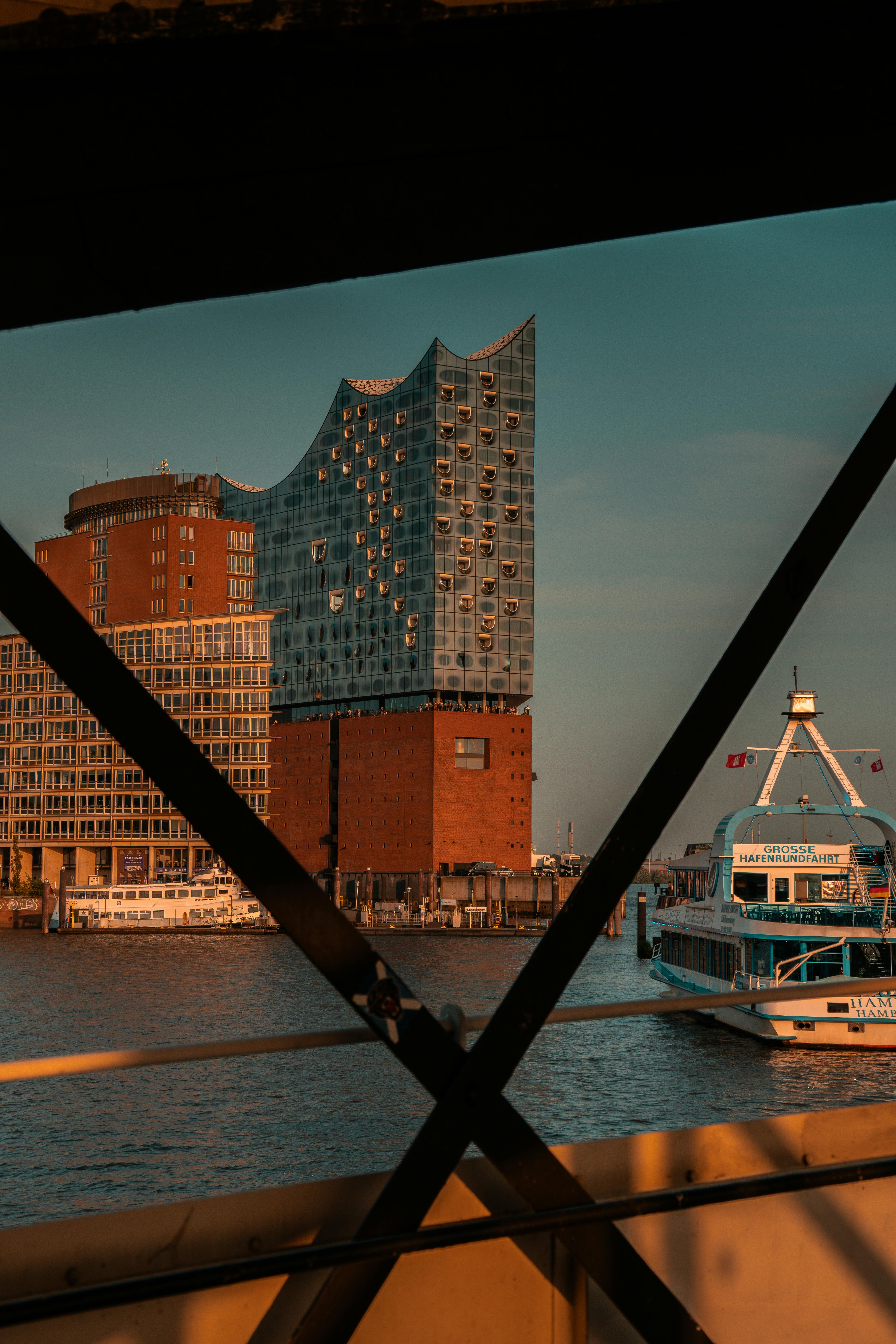
For us, as a Hamburg-based sustainability consulting firm, this step makes perfect strategic sense: ÖKOPROFIT combines regional economic development, corporate environmental protection, and pragmatic implementation—precisely where many small and medium-sized enterprises are currently seeking a low-threshold yet effective entry point into sustainability management.
ÖKOPROFIT stands for " Ecological Project for Integrated Environmental Technology." At its core, it is a municipally sponsored environmental consulting program that helps companies improve their environmental performance while reducing operating costs.
A hallmark of ÖKOPROFIT is its combination of joint workshops, individualized business consulting, analysis of energy, water, waste, and resource consumption, development of concrete measures, exchange of experiences among participating companies, and final certification as an ÖKOPROFIT business. Unlike many sustainability approaches that focus solely on documentation, ÖKOPROFIT is strongly implementation-oriented. The goal is a concrete environmental program with measurable measures as a collaborative project between the regional business community, government, and experts.
This approach is particularly relevant for small and medium-sized enterprises: Many companies are facing growing pressure from energy prices, customer requirements, ESG questionnaires, supply chain requirements, and, looking ahead, sustainability reporting. At the same time, there is often a lack of a low-threshold entry point that does not immediately require a full-scale management system in accordance with ISO 14001 or EMAS. This is exactly where ÖKOPROFIT comes in.
The program was developed in Graz in 1991 and is now established in many cities as a collaborative project between local governments and the business community; according to the City of Graz, over 4,000 businesses in Germany alone have participated in ÖKOPROFIT projects.
The unique value of ÖKOPROFIT lies in its ability to combine business benefits with regional impact. Companies identify opportunities for savings, municipalities strengthen their local economies, and regions make tangible progress in climate protection.
North Rhine-Westphalia provides a particularly clear example of the economies of scale that are possible. According to publicly released program data, more than 2,200 companies from nearly 200 projects have already been involved there; these companies have implemented approximately 10,200 monetarily quantifiable environmental protection measures. Among other things, the program has resulted in savings of approximately 756 million kWh of energy, 332,630 tons of CO₂, 3.8 million m³ of water, and 87.7 million euros in operating costs per year.
An ÖKOPROFIT project is typically organized as a group or convoy program. Several companies participate in workshops together but also receive individual consulting at their own facilities. This combination is a key factor in the program’s success: companies benefit both from expert guidance and from the opportunity to exchange ideas with other businesses.
In Hamburg, for example, ten workshops and six on-site consultations are described as key milestones in the implementation of ÖKOPROFIT.
Typically, an ÖKOPROFIT process involves the following steps:
ÖKOPROFIT is appealing to local governments, economic development agencies, and regional climate protection managers because it achieves multiple objectives: engaging local businesses, increasing energy and resource efficiency, making climate protection tangible, strengthening regional networks, facilitating knowledge transfer between businesses, and positioning sustainability as a competitive advantage.
This means that ÖKOPROFIT is not just environmental policy, but also a modern economic development initiative. The program is a proven model, particularly for regions that want to combine climate protection goals with local economic growth.
The NRW funding guidelines also indicate that ÖKOPROFIT projects may be eligible for public funding depending on the type of project; for example, they specify that entry-level projects may receive up to 80% of eligible expenses, with a maximum of 25,000 euros.
For companies, this means that ÖKOPROFIT is most valuable when the results do not end up gathering dust in a drawer after the award is presented. Instead, the collected data, lists of measures, assigned responsibilities, and potential savings should be organized in such a way that they can continue to be used for other sustainability initiatives.
These include, in particular:
ÖKOPROFIT is also well established in Hamburg. The city describes the program as an initiative that helps companies tap into potential savings and reduce costs—combined with hands-on workshops and a strong network in the metropolitan region. Since the program’s launch in 2000, 33 introductory programs have already been carried out in Hamburg; over 400 companies from Hamburg and the metropolitan region have participated.
This is particularly relevant for Five Glaciers Consulting: As a Hamburg-based sustainability consulting firm with extensive experience in serving small and medium-sized businesses and developing climate strategies, we view ÖKOPROFIT as a framework that is ideally suited to many companies that want to translate sustainability not into abstract concepts, but into concrete terms—such as operating costs, energy consumption, specific measures, and responsibilities.
Ratings & certifications
Best Practices

Ratings & certifications
Best Practices

Ratings & certifications
Governance & regulation


Contact us for all concerns and questions relating to sustainability. We are happy to make time for a personal meeting or a digital coffee.
Headquarters in Hamburg
Tel.: +49 174 1305766
Email: info@fiveglaciers.com
Branch Office in Kiel
Tel.: +49 (0) 174 1305766
Direct appointment booking


