











DATE
22.08.2026
AUTHOR

SHARE


Glossary


Scope 1 encompasses all direct greenhouse gas emissions generated by a company through its own operations. These include combustion processes in heating and industrial facilities, the operation of company-owned vehicle fleets, and fugitive emissions from refrigerants or chemical processes. Scope 1 forms the basis of every carbon footprint calculation and must be reported in nearly all regulatory frameworks.
According to the Greenhouse Gas Protocol, Scope 1 refers to all emissions from sources owned or controlled by the company. These include:
This clearly distinguishes Scope 1 from Scope 2 (purchased energy) and Scope 3 (supply chain).
Scope 1 emissions are a mandatory component of:
For companies with energy-intensive processes, Scope 1 data also serves as the basis for the EU Emissions Trading System (EU ETS).
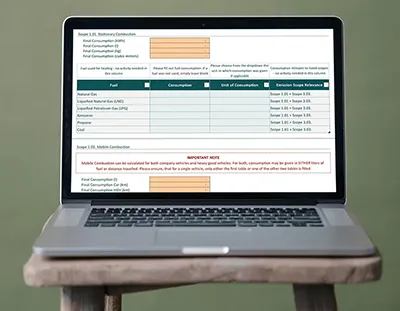
Scope 1 emissions are typically calculated based on consumption data (e.g., liters of heating oil, cubic meters of natural gas, fuel consumed) and converted to CO₂e using emission factors (see DEFRA, the German Federal Environment Agency, or the IPCC Guidelines). Fugitive emissions are accounted for using maintenance logs or standardized loss factors.
Companies use Scope 1 data to implement short-term reduction measures, such as energy efficiency initiatives, switching to renewable fuels, electrifying vehicle fleets, or replacing refrigerants with high global warming potential.
Scope 1 is considered the area over which companies have the greatest control. Reducing emissions in this area yields rapid results, demonstrates to stakeholders that the company is capable of taking action, and reduces dependence on carbon pricing systems. As a result, Scope 1 is not only a mandatory requirement but also a competitive advantage in the transition.
Further reading


Contact us for all concerns and questions relating to sustainability. We are happy to make time for a personal meeting or a digital coffee.
Headquarters in Hamburg
Tel.: +49 174 1305766
Email: info@fiveglaciers.com
Branch Office in Kiel
Tel.: +49 (0) 174 1305766
Direct appointment booking


